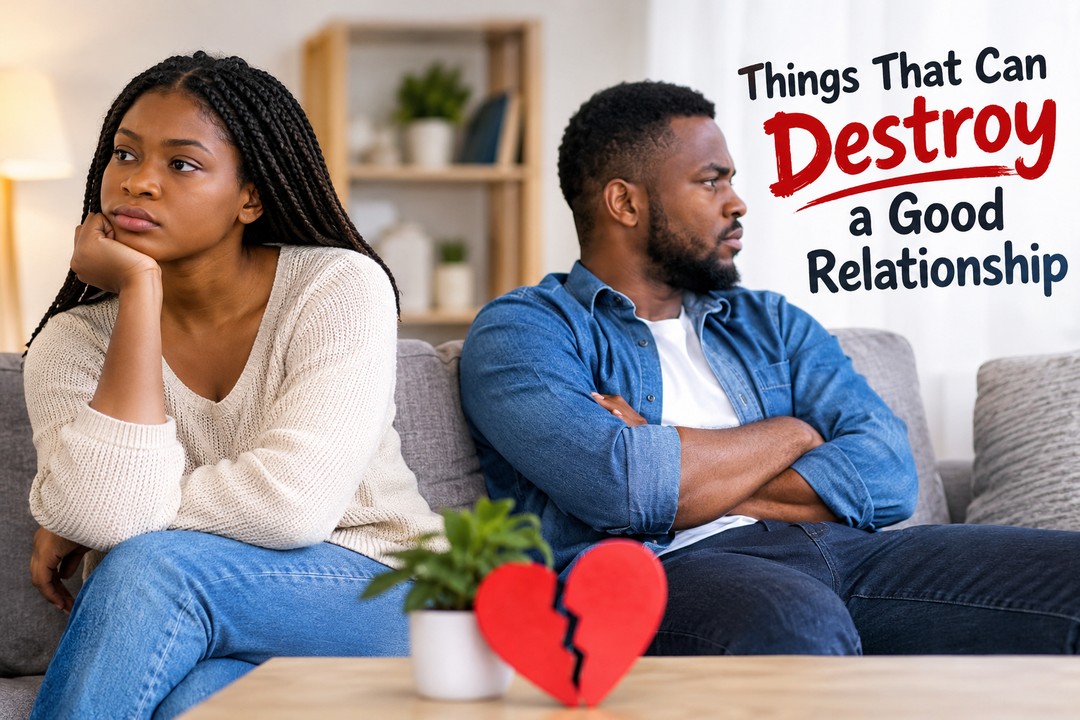
 A good relationship does not usually fall apart overnight. In many cases, it happens slowly. Small problems are ignored, communication becomes weaker, trust begins to disappear, and two people who once felt very close can eventually feel like strangers.
Every relationship has challenges. Arguments, misunderstandings, financial pressure, busy schedules, family issues, and differences in personality are normal. What matters is how couples deal with these challenges.
Some habits, however, can gradually damage even a strong relationship if they are allowed to continue.
Whether you are dating, engaged, married, or simply trying to understand relationships better, knowing what can destroy a good relationship can help you protect it.
1. Lack of Communication
One of the biggest threats to a healthy relationship is poor communication.
When partners stop talking openly about their feelings, problems can grow silently. One person may feel ignored while the other has no idea there is a problem.
Instead of saying, “This hurt me,” someone may remain silent and expect their partner to figure it out.
Healthy communication does not mean talking all day. It means being able to discuss important issues honestly and respectfully.
Sometimes a simple conversation can prevent a small misunderstanding from becoming a major problem.
2. Lack of Trust
Trust is one of the foundations of a strong relationship.
When trust disappears, almost everything becomes difficult.
A person who no longer trusts their partner may constantly question where they are, who they are talking to, or what they are doing.
Trust can be damaged by lying, cheating, hiding important information, breaking promises, or repeatedly behaving in ways that make a partner feel insecure.
Rebuilding trust can take much longer than destroying it.
3. Constant Lying
Small lies can become big problems.
Someone might lie about where they went, who they were with, how they spent money, or what they were doing.
Even when the original issue seems small, repeated dishonesty can create a much larger problem.
Eventually, the other person may begin questioning everything.
A healthy relationship needs honesty, even when the truth is uncomfortable.
4. Cheating and Infidelity
Infidelity can cause enormous damage to a relationship.
Cheating is not only about physical intimacy. Emotional relationships, secret conversations, hidden dating profiles, and other forms of secrecy can also seriously damage trust.
For many couples, the biggest injury is not only what happened but the feeling that their partner deliberately hid it.
Some relationships recover after infidelity, while others do not. Either way, rebuilding trust requires honesty, accountability, and significant effort.
5. Taking Your Partner for Granted
When a relationship becomes comfortable, people sometimes stop appreciating each other.
They may stop saying thank you.
They may stop noticing the effort their partner makes.
They may assume their partner will always be there no matter how they behave.
Feeling appreciated is important.
Small acts such as saying “thank you,” checking on your partner, helping with responsibilities, or simply recognizing their efforts can make a significant difference.
6. Constant Criticism
There is a difference between helping someone improve and constantly making them feel inadequate.
Repeated criticism can slowly damage someone’s confidence.
If every mistake becomes an opportunity to attack your partner’s personality, appearance, intelligence, career, family, or abilities, resentment can develop.
Problems should be addressed without destroying the person’s dignity.
Instead of attacking the person, focus on the behavior.
7. Disrespect
Love without respect can become extremely unhealthy.
Disrespect can appear in many forms:
- Insults
- Humiliation
- Mocking
- Name-calling
- Ignoring boundaries
- Public embarrassment
- Belittling someone’s opinions
- Treating their feelings as unimportant
A disagreement does not give either partner permission to deliberately humiliate the other.
Respect should remain present even during arguments.
8. Poor Conflict Resolution
Every couple disagrees.
The goal is not necessarily to eliminate disagreements. The goal is to learn how to handle them.
Some people shout.
Others walk away and refuse to speak.
Some bring up every mistake their partner has made in the past.
Others involve friends and family in every disagreement.
These approaches can make problems worse.
Healthy conflict resolution involves listening, explaining your feelings, finding common ground, and taking time to calm down when emotions become overwhelming.
9. Refusing to Apologize
Nobody is perfect.
Sometimes you will be wrong.
Sometimes your partner will be wrong.
A simple, sincere apology can prevent a disagreement from becoming much larger.
But when someone refuses to admit mistakes because they believe apologizing makes them weak, resentment can grow.
An apology does not mean losing an argument. It means recognizing that your actions affected another person.
10. Holding Onto Past Mistakes
Forgiveness does not mean pretending something never happened.
But if someone says they have forgiven their partner and then brings up the same mistake during every future argument, the relationship may never move forward.
If a problem has genuinely been resolved, both people need to work toward rebuilding the relationship instead of repeatedly reopening the wound.
However, serious repeated behavior should not simply be ignored in the name of forgiveness.
11. Lack of Quality Time
Being physically together does not always mean being emotionally connected.
Two people can live in the same house while barely having meaningful conversations.
Phones, work, social media, entertainment, and other responsibilities can consume people’s attention.
Quality time allows partners to reconnect.
It doesn’t have to involve expensive dates.
A walk, shared meal, conversation, game, or simple evening together can help maintain emotional closeness.
12. Financial Problems and Secrecy
Money is one of the subjects that can create serious tension between partners.
Problems can arise when one person spends irresponsibly, hides debts, refuses to discuss finances, or expects the other person to carry all financial responsibilities.
Different attitudes toward money can also cause conflict.
One person may prefer saving while the other enjoys spending.
The solution is not necessarily having identical financial habits. Couples need honest conversations about income, expenses, priorities, debt, savings, and future goals.
13. Comparing Your Partner to Other People
“Why can’t you be more like him?”
“Look at what her husband does.”
“You don’t look like her.”
Comments like these can seriously damage a person’s self-esteem.
Your partner is not competing with every person you see online or in real life.
Constant comparison can make someone feel that they will never be good enough.
Appreciate your partner as an individual while discussing genuine areas where both of you can grow.
14. Excessive Jealousy
A little jealousy can sometimes occur naturally.
But excessive jealousy can become destructive.
Constant accusations, checking someone’s phone without permission, controlling friendships, monitoring their movements, or demanding passwords can create fear rather than trust.
A healthy relationship needs boundaries and mutual respect.
Love should not require someone to give up their independence.
15. Controlling Behavior
Control can appear in subtle ways.
Someone may try to decide what their partner wears, who they can see, where they can go, what career they should pursue, or how they should spend their money.
At first, controlling behavior may be disguised as concern.
Over time, however, it can become a serious problem.
A healthy relationship allows both people to maintain their identity and make reasonable personal choices.
16. Keeping Secrets
Privacy and secrecy are not exactly the same thing.
Everyone deserves some personal space.
But deliberately hiding major information that affects the relationship can destroy trust.
Secret debts, hidden relationships, major financial decisions, and other significant secrets can become much more damaging when eventually discovered.
Honesty creates security.
17. Neglecting Emotional Needs
People need to feel heard, valued, respected, and supported.
When one partner repeatedly ignores the other’s emotional needs, distance can develop.
Someone may begin feeling lonely even while being in a relationship.
Ask your partner questions.
Listen to their answers.
Find out what is stressing them.
Ask how they are doing—not only physically, but emotionally.
Sometimes people don’t need immediate solutions. They simply need someone who genuinely listens.
18. Social Media and Online Comparisons
Social media can create unrealistic expectations about relationships.
People often post vacations, gifts, romantic dinners, anniversaries, and happy moments while hiding their problems.
Comparing your relationship to carefully selected online moments can create unnecessary dissatisfaction.
Your relationship does not have to look like someone else’s relationship to be valuable.
19. Involving Too Many People in Relationship Problems
Friends and family can provide valuable support.
However, telling everyone about every disagreement can create additional problems.
Once private information spreads, it may be difficult to take it back.
Choose carefully who you trust with sensitive relationship matters.
For serious problems, professional counseling or another qualified source of support may be more appropriate than relying solely on social-media opinions.
20. Lack of Boundaries
Healthy relationships need boundaries.
Boundaries can involve personal space, friendships, privacy, finances, family involvement, communication, and many other areas.
Without boundaries, one person may feel overwhelmed or controlled.
Good boundaries are not walls designed to keep your partner away. They are agreements that help both people feel safe and respected.
21. Becoming Emotionally Distant
Relationships need emotional connection.
If partners stop sharing their thoughts, dreams, fears, successes, and everyday experiences, they may gradually become disconnected.
Emotional intimacy requires attention.
Ask questions.
Share experiences.
Talk about your future.
Laugh together.
Be curious about the person you love.
22. Refusing to Grow Together
People change as they get older.
Career goals can change.
Interests can change.
Financial situations can change.
Personal priorities can change.
A strong relationship needs room for both people to grow.
Partners don’t have to become identical, but they should remain interested in understanding who the other person is becoming.
23. Unresolved Family Problems
Family can be an important part of a relationship, but family boundaries sometimes become difficult.
Problems can occur when relatives interfere excessively, one partner always takes their family’s side, or couples cannot establish reasonable boundaries with relatives.
Partners need to communicate about how much influence outside family members should have over their relationship.
24. Lack of Affection
Affection is not limited to physical intimacy.
It can include hugs, kind words, holding hands, checking on your partner, giving compliments, or simply showing warmth.
When affection disappears completely, partners may begin to feel unwanted.
Everyone expresses affection differently, so couples should learn what makes each person feel loved and appreciated.
25. Taking Your Partner’s Love for Granted
Perhaps one of the most dangerous relationship habits is assuming that your partner will always stay.
People sometimes become careless because they believe their partner would never leave.
But relationships require ongoing effort.
Love needs attention.
Trust needs protection.
Communication needs practice.
Appreciation needs expression.
A relationship can be strong today and still require care tomorrow.
How Can You Protect a Good Relationship?
There is no perfect relationship, but couples can develop healthier habits.
Here are some simple principles:
- Communicate honestly.
- Listen before responding.
- Keep promises.
- Respect boundaries.
- Appreciate your partner.
- Spend meaningful time together.
- Discuss money openly.
- Avoid unnecessary comparisons.
- Admit when you are wrong.
- Learn how to disagree respectfully.
- Protect each other’s privacy.
- Support each other’s goals.
- Keep affection alive.
- Solve problems instead of collecting resentment.
- Continue learning about each other.
Final Thoughts
A good relationship is not maintained by love alone.
Love is important, but relationships also require trust, respect, communication, honesty, patience, boundaries, appreciation, and consistent effort.
Most relationships will experience difficult periods. Having an argument does not automatically mean a relationship is failing. What matters is whether both people are willing to understand the problem and work toward a healthier relationship.
Sometimes the biggest relationship problems begin with things that seem very small: one unanswered conversation, one repeated lie, one ignored feeling, one unnecessary comparison, or one apology that never comes.
The good news is that many destructive habits can be recognized and changed.
A healthy relationship isn’t about finding two perfect people. It is about two imperfect people who are willing to communicate, learn, respect each other, and keep choosing to build something better together.
Your Turn: What Do You Think?
What do you think destroys relationships faster: lack of communication, cheating, money problems, jealousy, disrespect, or something else?
And what is one thing you believe every couple should never stop doing?
Share your opinion in the comments. Your experience might help someone else understand their own relationship better.